
JU Agri Sciences: Understanding Mancozeb Fungicide, Cymoxanil + Mancozeb, Systemic Fungicides, and Contact Fungicides for Crop Protection
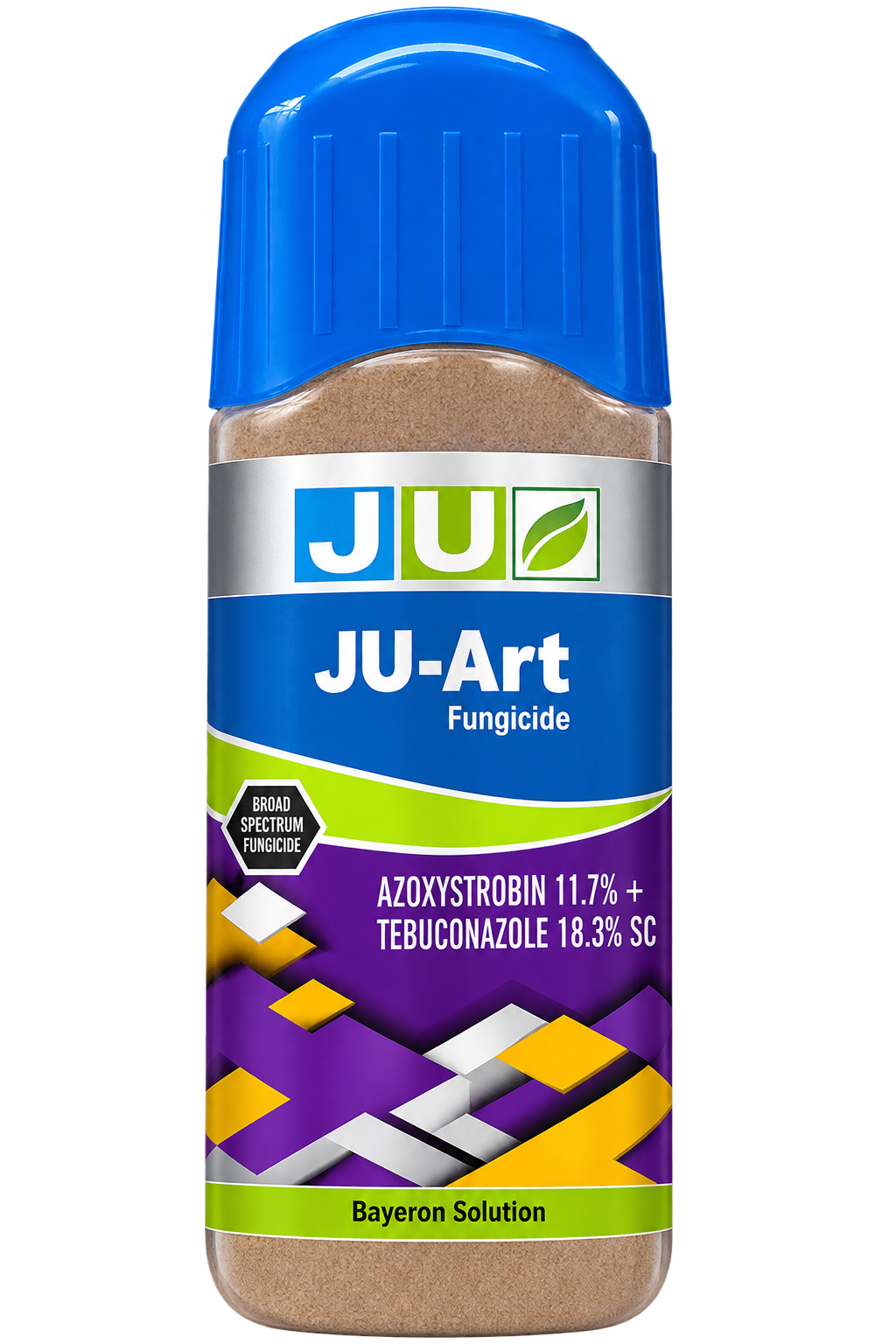
Introduction to Fungicide-Based Crop Protection
Fungal diseases are a persistent challenge for farmers growing cereals, vegetables, pulses, fruits, and other commercial crops. When conditions become favourable for fungal pathogens, infections can spread across leaves, stems, and other plant parts, affecting photosynthesis, crop development, produce quality, and final yield. Rainfall, high humidity, poor air circulation, and repeated cultivation of susceptible crops can increase disease pressure in many agricultural regions.
Choosing an appropriate fungicide is an important part of responsible crop disease management. However, effective protection requires more than selecting a product. Farmers must understand the disease involved, identify its early symptoms, assess field conditions, and follow the product label for application timing and dosage. Fungicides also differ in how they act on plant surfaces and within plant tissues.
JU Agri Sciences operates in the agricultural inputs sector, serving farming and crop-protection needs through a portfolio of agricultural products. Understanding the role of mancozeb fungicide, cymoxanil + mancozeb fungicide, systemic fungicides, and contact fungicides can help farmers and agricultural professionals make more informed crop-protection decisions.
What Is Mancozeb Fungicide?
Mancozeb is a widely used, multisite contact fungicide that helps protect crops against various fungal diseases. It acts primarily on plant surfaces, creating a protective layer that interferes with several processes required for fungal development. Because its activity involves multiple sites, mancozeb is commonly used as a preventive component of disease-management programmes where it is registered and recommended.
Unlike fungicides designed to move systemically through plant tissues, mancozeb primarily protects the treated surface. This makes application coverage particularly important. Leaves, stems, and other target areas must receive adequate spray deposition according to the crop and product label. New growth that develops after treatment may not be protected by an earlier application.
Mancozeb formulations are used in different crop-protection situations, depending on the registered product, crop, and target disease. Farmers may encounter it in products intended for managing diseases such as leaf spots, blights, and other fungal infections. The specific diseases controlled vary by formulation and registration, so the product label should always guide selection.
How Does Mancozeb Work on Plant Surfaces?
Mancozeb is classified as a contact, multisite fungicide. Rather than relying on movement throughout the plant, it acts on susceptible fungal pathogens that encounter the treated surface. Its multisite activity interferes with multiple essential biochemical processes in fungi, helping prevent spore germination and early infection when applied appropriately.
The preventive nature of mancozeb is important. It is generally most useful when applied before infection becomes established or at the timing recommended for the target disease. It should not automatically be considered a cure for advanced infections. Once disease symptoms appear, farmers need to determine whether the symptoms are caused by a fungus, bacteria, nutrient deficiency, or another factor before choosing a management strategy.
Good spray coverage, correct dilution, suitable application equipment, and weather-aware timing all contribute to treatment performance. Rainfall after application may affect the persistence of a surface deposit, depending on the formulation and conditions. Farmers should follow label instructions regarding rainfastness and any required repeat treatment rather than assuming that every application remains effective after rain.
Understanding Cymoxanil + Mancozeb Fungicide
Cymoxanil + mancozeb is a combination fungicide that brings together two active ingredients with different modes of action. Cymoxanil has local systemic and translaminar activity, while mancozeb provides contact protection on treated plant surfaces. The combination is used in certain disease-management programmes where the formulation is registered for the crop and target pathogen.
The two ingredients perform complementary roles. Mancozeb helps protect the plant surface against susceptible fungal pathogens, while cymoxanil can act within treated tissues and contribute to the management of specific diseases. The precise performance of the combination depends on the formulation, disease stage, application timing, environmental conditions, and pathogen sensitivity.
Cymoxanil + mancozeb fungicide is often associated with the management of diseases such as late blight and downy mildew in crops for which the product is approved. These diseases can develop rapidly under favourable conditions, making early identification and timely management especially important.
Farmers should not assume that every cymoxanil + mancozeb formulation is approved for every crop or fungal disease. Product concentration, registration, application rate, pre-harvest interval, and other label requirements can differ. Always consult the specific product label and seek guidance from a qualified agricultural professional when necessary.
Cymoxanil + Mancozeb: Why the Combination Matters
Using active ingredients with complementary activity can support a broader crop-protection strategy. The contact component helps protect exposed plant surfaces, while the local systemic component can provide activity within treated tissues. This combination may be useful for particular diseases when applied at the appropriate stage.
However, a combination fungicide is not a substitute for accurate diagnosis or sound field management. Disease symptoms such as leaf lesions, yellowing, and drying can arise from different causes. Incorrect identification may lead to unnecessary spraying, increased production costs, and poor disease control.
For this reason, farmers should inspect crops regularly and look for changes in lesion shape, colour, distribution, and progression. They should also consider recent weather conditions, crop growth stage, and the history of disease in the field. Local agricultural extension services or qualified crop advisers can help distinguish similar-looking problems.
A fungicide should be selected according to the identified disease and the approved use directions. Rotating suitable fungicides with different modes of action, where recommended, can also form part of resistance-management planning. Repeated reliance on one active ingredient or mode of action may increase the risk of reduced sensitivity in some pathogens.
Systemic Fungicide vs Contact Fungicide
Systemic fungicides and contact fungicides differ mainly in how they interact with plant tissues and pathogens. Understanding these differences helps farmers choose a product that fits the disease-management objective.
A contact fungicide remains primarily on the treated surface and protects areas that receive adequate coverage. Mancozeb is a common example. Because the active ingredient does not move extensively throughout the plant, untreated surfaces and new growth may remain vulnerable. Thorough application and the timing specified on the label are therefore important.
A systemic fungicide is absorbed by plant tissues and, depending on the active ingredient, may move within the plant. Some products move mainly into nearby tissues, while others can move farther through the plant's vascular system. The extent and direction of movement vary, so the term “systemic” should not be interpreted as meaning that every plant part receives complete protection.
Systemic fungicides may be appropriate for certain diseases where their movement and activity match the target pathogen. Nevertheless, they are not universally effective against all fungi, and their use must follow crop-specific registration and label directions.
Some fungicide formulations combine contact and local systemic activity. Cymoxanil + mancozeb is an example of this approach. The combination provides different types of activity, but it should still be used only for approved crops and target diseases. No fungicide should be considered a universal solution for every plant disease.
What Should Farmers Know About Mancozeb Fungicide Powder?
The phrase mancozeb fungicide powder commonly refers to a dry formulated product containing mancozeb. Some products are wettable powders designed to be dispersed in water before spraying, while other dry formulations may have different handling and mixing characteristics. The formulation name on the package determines how the product must be prepared and applied.
Farmers should never assume that all powder formulations are used in the same way. Before mixing, read the label for the recommended water volume, dosage, mixing sequence, protective equipment, and application method. Use clean equipment and ensure the formulation is mixed as directed to support consistent coverage.
Avoid inhaling dust during handling and prevent the product from contacting skin or eyes. Wear the protective equipment specified on the label, and keep pesticides away from children, food, animal feed, and water sources. Do not use food or drink containers to measure or store agricultural chemicals.
Disposal of empty packaging and leftover spray mixture must follow the product label and applicable local regulations. Never pour pesticide residues into drains, ponds, irrigation channels, or other water bodies. Responsible handling protects the applicator, nearby communities, livestock, and the environment.
Integrated Disease Management Beyond Fungicide Spraying
Fungicides are most useful when they form part of an integrated crop-disease management plan. Cultural practices can help reduce the conditions that favour infection. These practices may include selecting suitable varieties, maintaining appropriate crop spacing, managing crop residues where recommended, ensuring proper drainage, and avoiding irrigation practices that unnecessarily prolong leaf wetness.
Regular field scouting allows farmers to identify disease symptoms before they become widespread. Monitoring weather conditions and local disease advisories can also help determine when additional attention may be required. The correct approach varies by crop, pathogen, and region, so recommendations should be adapted to local conditions.
Farmers should also consider resistance management. Where the label and local recommendations permit, alternating fungicides with different modes of action can reduce repeated selection pressure on a pathogen. Mixing or alternating products should only be done when the practice is permitted and agronomically appropriate. Increasing the dosage beyond the label recommendation is not a safe or reliable way to improve control.
Protecting beneficial organisms, limiting unnecessary applications, and observing re-entry intervals and pre-harvest intervals are also important parts of responsible pesticide use. These measures help align crop protection with farm-worker safety, produce quality, and environmental stewardship.
JU Agri Sciences and Informed Crop Protection
JU Agri Sciences serves the Indian agricultural sector through a portfolio that includes crop-protection and plant-nutrition products. Farmers, dealers, distributors, and agricultural professionals benefit from understanding how different fungicide categories work before selecting products for specific crop challenges.
When evaluating a mancozeb fungicide or a cymoxanil + mancozeb formulation, users should check the product's active ingredients, concentration, registered crops, target diseases, recommended dose, and safety precautions. Product suitability depends on these details rather than the general category name alone.
A responsible crop-protection decision combines accurate disease identification, the right registered product, correct application, and ongoing field monitoring. This approach can help farmers manage disease risks while avoiding unnecessary or inappropriate pesticide use.
Frequently Asked Questions
Is mancozeb a contact or systemic fungicide?
Mancozeb is primarily a contact, multisite fungicide. It protects treated surfaces and does not move extensively through plant tissues. Adequate spray coverage and application at the recommended time are therefore important.
What is cymoxanil + mancozeb fungicide used for?
Certain registered cymoxanil + mancozeb formulations are used to manage diseases such as late blight and downy mildew in approved crops. The permitted crop, target disease, dose, and timing depend on the specific product label.
Can farmers use contact and systemic fungicides interchangeably?
No. Their activity and suitable uses can differ. Contact fungicides primarily protect treated surfaces, whereas systemic or locally systemic fungicides can act within plant tissues to varying degrees. Farmers should select a fungicide based on the diagnosed disease, approved product directions, and local agricultural recommendations.
Conclusion
Mancozeb fungicide, cymoxanil + mancozeb, systemic fungicides, and contact fungicides each have distinct roles in crop disease management. Mancozeb provides contact protection, while cymoxanil + mancozeb combines contact activity with local systemic action for specific registered uses. Understanding these differences helps farmers make more informed decisions about disease prevention and treatment.
Through its agricultural portfolio, JU Agri Sciences supports the broader needs of India's farming sector. Effective crop protection, however, depends on using the right product for the identified problem, following label instructions, managing resistance, and combining chemical treatments with appropriate agricultural practices. Always follow the current approved product label and consult a qualified agricultural professional when disease identification or treatment decisions are uncertain.

 Arabic
 French
 Spanish
 Portuguese
 Deutsch
 Turkish
 Dutch
Dutch
 Italiano
 Russian
 Romaian
 Portuguese (Brazil)
 Greek
Greek