
What Is Making Shaftless Home Elevators More Relevant to Modern Residential Living?
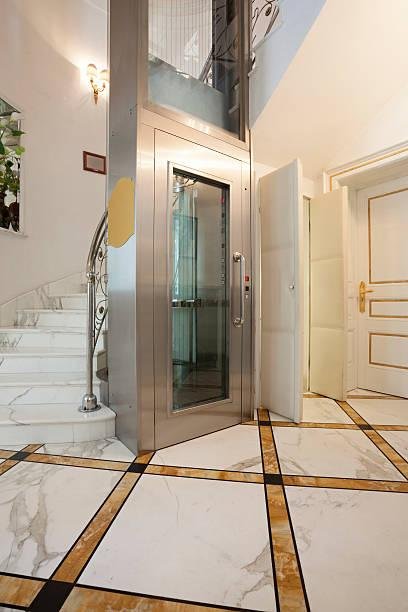
Residential design is increasingly expected to combine comfort, accessibility, convenience, and long-term usability. As homeowners look for ways to make multi-level properties easier to navigate without undertaking extensive structural reconstruction, compact vertical mobility solutions are gaining greater relevance. Shaftless home elevators offer an approach that can fit into residential environments where conventional elevator construction may be difficult or impractical. According to a Vyansa Intelligence report, the shaftless home elevator market was valued at USD 2.87 Billion in 2025 and is projected to reach USD 6.22 Billion by 2032, registering a CAGR of 11.68% during 2026-2032.
Why Are Homeowners Looking Beyond Conventional Elevator Designs?
Traditional elevators can require dedicated shafts, substantial structural planning, and considerable space. For existing homes, these requirements can make installation complicated, particularly when the building was never designed to accommodate an elevator.
Shaftless systems provide an alternative approach. Their compact configuration can allow homeowners to introduce vertical mobility while limiting the extent of structural changes required. This makes them relevant not only for newly constructed residences but also for renovation and modernization projects.
The appeal is particularly strong where homeowners want to improve accessibility without changing the fundamental layout of their property. Instead of treating an elevator as a feature reserved for large buildings, residential mobility can increasingly be considered part of broader home improvement planning.
This is an important aspect of current industry analysis because the value proposition extends beyond convenience. A residential elevator can support mobility between floors, improve the usability of multi-level homes, and help properties remain functional as household needs change.
Could Aging-in-Place Change Residential Accessibility Priorities?
One of the most important forces shaping residential mobility is the desire to remain in familiar homes for longer. As mobility requirements change with age, stairs can become a significant barrier within multi-level properties.
A shaftless home elevator can provide a way to connect different floors while supporting greater independence. Instead of relocating because a home becomes difficult to navigate, residents can consider modifications that adapt the property to changing requirements.
The concept of aging in place therefore connects home elevators with a wider shift in residential planning. Accessibility is increasingly relevant not only to specialised housing but also to ordinary residential environments where long-term usability is becoming a consideration.
This creates an opportunity for manufacturers and installers to position shaftless elevators around independence, safety, comfort, and home continuity rather than presenting them solely as luxury products.
How Does Retrofit Potential Influence Demand?
Retrofit installation is particularly significant because a large proportion of residential properties already exist. Homeowners considering renovation may want improvements that provide meaningful functional benefits without requiring major reconstruction.
Shaftless systems can fit into this requirement because their installation approach may reduce the need for extensive building alterations compared with conventional elevator configurations. However, every property presents different structural conditions.
Available floor area, elevator placement, electrical requirements, access points, and the relationship between floors all need to be assessed before installation. Consequently, the retrofit opportunity also creates demand for professional consultation and site evaluation.
For the shaftless home elevator industry report, this distinction is important. Product demand cannot be considered independently from installation expertise. The ability to recommend an appropriate system and integrate it correctly into the property can become an important part of the customer proposition.
Why Will Safety and Compliance Remain Essential?
Residential elevators are safety-critical equipment, making installation, maintenance, inspection, and compliance central to their long-term acceptance.
The Bureau of Indian Standards notes that lifts are safety-critical systems and recommends professionally installed and maintained equipment. BIS also identifies specific Indian Standards relevant to home lifts, including standards covering installation and maintenance.
The National Building Code guidance similarly covers planning, design, installation, operation, maintenance, and inspection of lifts. It specifically recognises home lifts and lifts without conventional machine rooms among the applications requiring consideration during building planning.
For homeowners, this means purchasing decisions should extend beyond appearance, footprint, or initial cost. Safety systems, installation quality, maintenance arrangements, emergency operation, and compliance should all form part of the evaluation process.
Can Smart Technology Add More Value to Home Elevators?
Residential technology is becoming increasingly connected, and elevators can become part of this broader environment. Smart controls, remote monitoring, diagnostics, and connected interfaces can improve the way homeowners interact with mobility equipment.
The role of technology is not limited to convenience. Connected systems can support maintenance planning and help service providers identify potential issues before they become more serious. This can improve the overall ownership experience while making maintenance more structured.
For manufacturers, technology therefore provides another avenue for differentiation. A shaftless elevator can increasingly be evaluated not only by its physical design but also by its controls, monitoring capabilities, user interface, and integration with other residential systems.
What Could Limit Wider Installation?
Despite their advantages, shaftless home elevators are not suitable for every property. Existing homes can present structural and spatial limitations that influence where and how a system can be installed.
Property owners may need to consider available space, floor configuration, electrical infrastructure, building permissions, and installation requirements. These factors can increase project complexity and affect the feasibility of an installation.
The challenge creates an important role for professional installers. A successful project requires accurate assessment of the property and clear communication about what modifications may be necessary.
BIS guidance on existing lifts also emphasises risk assessment and risk reduction as important components of improving lift safety, reinforcing the broader importance of structured safety evaluation within lift systems.
Where Could Residential Mobility Solutions Go Next?
The future of shaftless home elevators is closely connected with how homeowners think about long-term residential usability. Accessibility, aging in place, renovation, convenience, and smart-home integration are increasingly overlapping rather than existing as separate considerations.
This creates space for manufacturers and service providers to develop solutions that are compact, visually compatible with residential interiors, technologically capable, and straightforward to maintain.
For homeowners, the decision is also becoming more strategic. A residential elevator can represent an investment in how a property functions over time, particularly when moving between floors becomes more difficult or when residents want to retain the flexibility of a multi-level home.
Detailed market insight therefore points toward a category that is moving beyond the traditional perception of residential elevators as purely premium additions. Shaftless systems can serve practical accessibility requirements while also supporting convenience and long-term home adaptation.
As residential construction and renovation increasingly place greater emphasis on usability, the combination of compact installation, accessibility, safety, and connected technology could make shaftless home elevators an increasingly important component of modern residential mobility.

 English
 Arabic
 French
 Spanish
 Portuguese
 Deutsch
 Turkish
 Dutch
 Italiano
 Russian
 Romaian
 Greek