
Mitsubishi Forklift Mast Cylinders: Functions, Maintenance, and Replacement
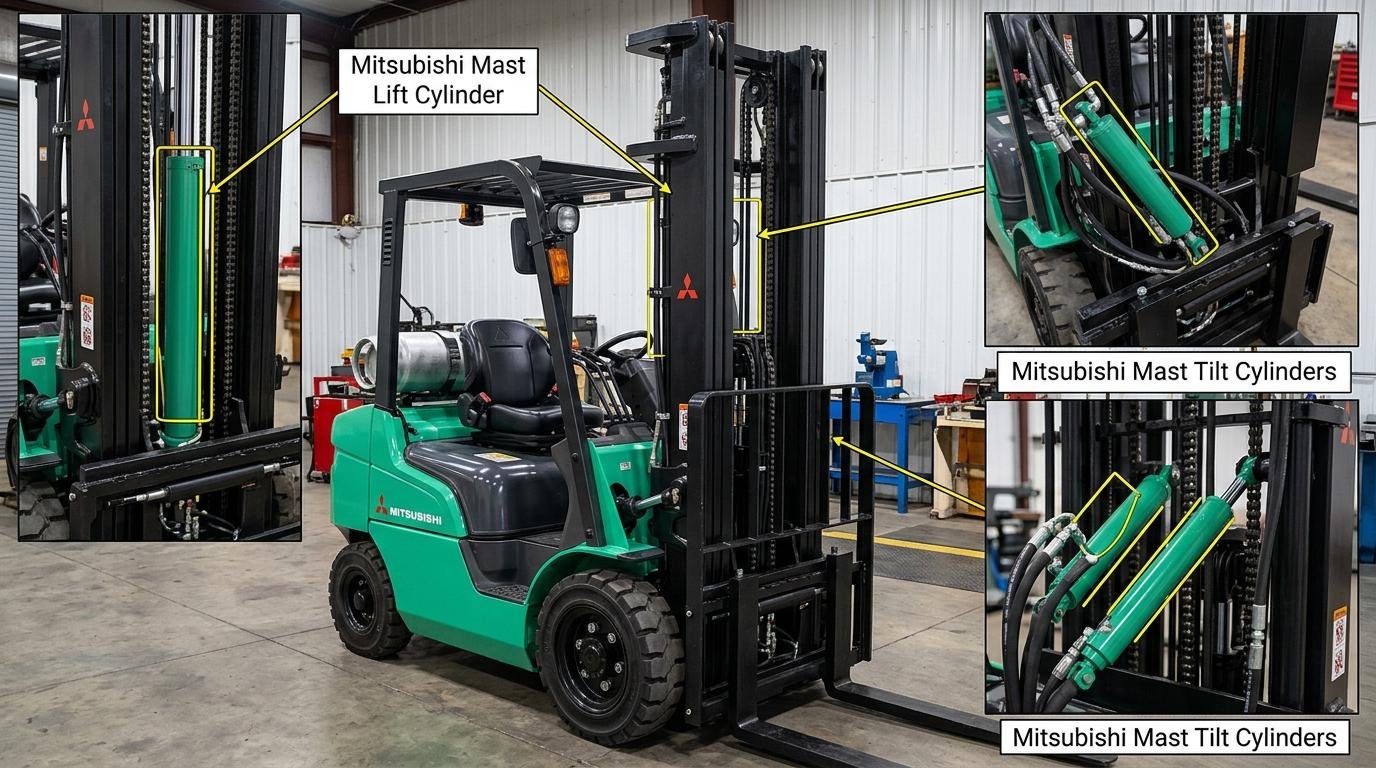
Mitsubishi forklift mast cylinders play an important role in lifting and lowering loads safely and efficiently. These hydraulic components provide the force needed to raise the forklift mast and move materials to the required height. In warehouses, manufacturing facilities, distribution centers, and construction sites, properly working mast cylinders help operators handle materials with greater control and reliability. Regular inspection and maintenance can also reduce unexpected equipment downtime and extend the service life of a forklift.
Understanding Mitsubishi Forklift Mast Cylinders
Mitsubishi forklift mast cylinders are hydraulic components designed to support the lifting system of a forklift. They use pressurized hydraulic fluid to create the movement needed to raise or lower the mast. Depending on the forklift model and mast configuration, a machine may use lift cylinders, free-lift cylinders, or other hydraulic cylinders to perform specific functions.
Lift cylinders generally provide the force required to raise the mast and its load. Free-lift cylinders allow the forks to rise within the mast structure before the mast itself extends significantly. This function is particularly useful in warehouses with limited overhead clearance, where operators need to lift pallets without raising the entire mast assembly immediately.
Choosing the correct cylinder depends on the forklift's model, lifting capacity, mast type, and hydraulic system specifications. Using compatible replacement components helps maintain proper operation and reduces the risk of premature wear.
Common Signs of Mast Cylinder Problems
Hydraulic mast cylinders can develop problems because of regular use, contamination, worn seals, or damage to internal components. Recognizing early warning signs allows equipment owners to arrange repairs before a minor issue affects daily operations.
One common symptom is hydraulic fluid leaking around the cylinder rod or seals. Leaks can indicate worn seals, damaged rod surfaces, or loose connections. Even a small leak should be inspected because hydraulic fluid loss can affect lifting performance and create slippery working conditions.
Another warning sign is slow or uneven mast movement. If the forks rise more slowly than usual, stop unexpectedly, or move unevenly, the problem may involve the cylinder, hydraulic pump, control valve, or another part of the hydraulic system. The cause should be identified before replacing components.
A forklift mast that gradually lowers when the controls are in the neutral position may also require immediate inspection. Internal cylinder leakage or a faulty hydraulic control valve can contribute to this problem. Because unexpected lowering creates a serious safety risk, the forklift should be removed from service until a qualified technician determines the cause.
Selecting the Right Replacement Cylinder
Selecting suitable Mitsubishi forklift mast cylinders requires accurate equipment information. Forklifts can have different cylinder designs even within the same manufacturer’s product range. A replacement that looks similar may not have the correct dimensions, stroke length, mounting arrangement, or pressure rating.
Before ordering a cylinder, identify the forklift model and serial number. Check the original part number and confirm whether the equipment uses a standard mast, a two-stage mast, or a three-stage mast. The cylinder's mounting points, rod diameter, overall length, and operating specifications should also match the manufacturer's requirements.
Seal kits and other repair components may provide a practical solution when the cylinder body and rod remain in suitable condition. However, a cylinder with a bent rod, deep surface damage, severe corrosion, or structural defects may require complete replacement.
Using compatible parts helps maintain the intended lifting performance of the forklift. It is also important to follow the equipment manufacturer's service documentation rather than relying only on visual similarities when selecting hydraulic components.
Maintenance Practices for Better Performance
Routine maintenance helps keep Mitsubishi forklift mast cylinders operating reliably. Operators should check the mast area for visible hydraulic leaks, damaged hoses, unusual noises, and signs of irregular movement before using the equipment. Any abnormal condition should be reported promptly.
Technicians should inspect cylinder rods for scratches, corrosion, and other surface damage. A damaged rod can wear the seals and allow hydraulic fluid to escape. Keeping exposed components clean and maintaining the hydraulic system according to the manufacturer's recommendations can help reduce contamination and premature wear.
Hydraulic fluid levels and fluid condition also require attention. Incorrect fluid, contaminated oil, or inadequate fluid levels can affect the performance of the hydraulic system. Maintenance personnel should use the specified hydraulic fluid and follow the recommended service intervals.
Cylinder repairs must be performed by trained personnel using appropriate tools and procedures. Hydraulic pressure must be safely released, and the mast and raised components must be securely supported before service begins. Raised forks or masts should never be supported by hydraulic pressure alone during maintenance.
Benefits of Quality Mast Cylinder Components
Reliable mast cylinders help businesses maintain efficient material-handling operations. When the hydraulic lifting system performs as intended, operators can position pallets accurately, manage loads more consistently, and complete routine tasks with fewer interruptions.
Quality replacement components can also help reduce repeated repairs. A properly matched cylinder, installed according to the manufacturer's specifications, supports dependable hydraulic operation and can help protect related components from unnecessary stress.
For businesses operating several forklifts, keeping maintenance records is a useful way to identify recurring hydraulic problems. Recording leaks, repair dates, replacement parts, and inspection findings helps maintenance teams plan servicing and manage equipment costs more effectively.
When to Repair or Replace a Mast Cylinder
The decision to repair or replace a mast cylinder depends on the type and severity of the damage. Minor seal deterioration may be repairable with a suitable seal kit when the rod, barrel, and other components remain within acceptable service limits. More serious damage may require a complete cylinder replacement.
A professional inspection can help determine whether the cylinder can be rebuilt safely. Technicians can assess leakage, rod condition, internal wear, and other possible causes of poor lifting performance. They should also inspect related hydraulic components when the source of the problem is uncertain.
Replacing a damaged cylinder at the right time can help prevent extended downtime and support safer forklift operation. Repairs should always meet the manufacturer's technical requirements and applicable workplace safety procedures.
Conclusion
Mitsubishi forklift mast cylinders are essential components of the hydraulic lifting system. Their condition directly affects mast movement, load handling, and overall equipment reliability. Regular inspections, correct replacement part selection, and timely hydraulic maintenance can help businesses avoid costly interruptions.
By identifying leaks and performance changes early, equipment owners can address cylinder problems before they become more serious. Whether a forklift requires a seal repair or a complete cylinder replacement, choosing compatible components and using qualified technicians helps maintain dependable material-handling performance.

 Arabic
 French
 Spanish
 Portuguese
 Deutsch
 Turkish
 Dutch
Dutch
 Italiano
 Russian
 Romaian
 Portuguese (Brazil)
 Greek
Greek