
How Can a Fiber Laser Marking Machine Improve Product Branding?
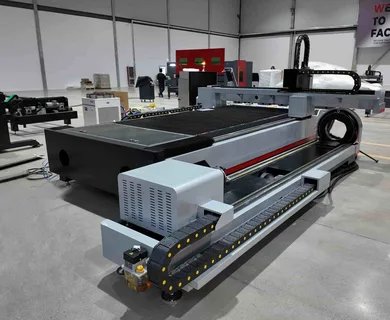
Product branding and customization have become important parts of modern manufacturing. Businesses need reliable ways to identify their products, display brand information, and create professional finishes. From industrial components to customized promotional items, the right technology can help improve production quality and consistency.
A fiber laser marking machine is a useful solution for businesses that require precise, permanent markings on compatible materials. At the same time, a heat transfer machine supports customized designs on fabrics and other suitable items, making it valuable for printing and promotional businesses.
Understanding how these technologies work can help manufacturers, printing companies, and entrepreneurs choose equipment that matches their production requirements.
What Is a Fiber Laser Marking Machine?
A fiber laser marking machine uses a concentrated laser beam to create text, logos, serial numbers, and other designs on compatible surfaces. Unlike traditional printing methods, laser marking does not require ink or direct contact with the material.
This technology is particularly suitable for applications that demand accuracy, durability, and consistent results.
Key Applications of Fiber Laser Marking
Businesses can use laser marking technology for various purposes, including:
-
Product identification: Marking model numbers, serial numbers, and manufacturing codes.
-
Branding: Adding company logos and brand information to products.
-
Industrial traceability: Creating barcodes and QR codes for product tracking.
-
Personalization: Adding names, symbols, and custom designs to suitable items.
-
Component marking: Identifying compatible metal parts used in manufacturing and engineering.
A fiber laser marking machine is commonly used for metals such as stainless steel, aluminum, brass, and copper. Certain systems can also mark selected plastics and other compatible materials, depending on the laser type and surface properties.
How Does Laser Marking Support Modern Manufacturing?
Manufacturing businesses often handle large numbers of components that require clear identification. Manual labeling and conventional marking methods may not provide the same level of consistency for every application.
Laser marking offers several practical advantages.
1. Permanent Product Identification
Laser marking can create durable information directly on compatible surfaces. This helps businesses maintain product identification throughout handling, storage, and use.
2. Detailed and Accurate Designs
Focused laser technology can reproduce small text, fine lines, and intricate patterns. This makes it suitable for products that require detailed markings.
3. Consistent Production Results
When machine settings and materials are appropriate, digital marking systems can reproduce the same design across multiple items. This is particularly useful for businesses working with repeated production batches.
4. Reduced Dependence on Consumables
Laser marking generally does not require printing ink or adhesive labels for the marking process itself. Businesses should still consider electricity, maintenance, extraction requirements, and other operating needs.
What Is a Heat Transfer Machine Used For?
A heat transfer machine applies controlled heat and pressure to transfer a design onto a compatible surface. It is widely used in garment customization, promotional products, and creative printing businesses.
Depending on the equipment and transfer material, businesses can produce customized apparel and other personalized items.
Common Heat Transfer Applications
A heat transfer machine can support applications such as:
-
Custom T-shirts and clothing
-
Team uniforms and sportswear
-
Promotional garments
-
Personalized fabric accessories
-
Branded merchandise
-
Heat-transfer vinyl designs
-
Customized gifts made from compatible materials
The final result depends on the machine, transfer medium, surface material, temperature, pressure, and application time.
Why Is Temperature Control Important?
Temperature plays an important role in heat transfer printing. If the temperature is too low, the design may not adhere properly. Excessive heat can damage sensitive materials or affect the appearance of the finished product.
Businesses should follow the recommended settings for the specific transfer film, fabric, or substrate they use. Testing a sample before beginning a production batch can help prevent avoidable errors.
Fiber Laser Marking Machine vs. Heat Transfer Machine
Although both technologies support customization and branding, they serve different purposes.
Understanding the Main Differences
Fiber laser marking machine
-
Creates markings directly on compatible surfaces.
-
Commonly used for metal components and product identification.
-
Supports serial numbers, logos, codes, and detailed graphics.
-
Produces markings designed to remain durable under suitable conditions.
Heat transfer machine
-
Transfers designs onto compatible materials using heat and pressure.
-
Commonly used for clothing, fabric graphics, and promotional products.
-
Supports colorful designs when paired with appropriate transfer media.
-
Requires suitable transfer materials and application settings.
These machines should not be considered direct replacements for one another. The right choice depends on the material, design requirements, and type of product a business manufactures or customizes.
How Can Businesses Choose the Right Machine?
Selecting production equipment requires a clear understanding of daily operations. Businesses should evaluate their intended applications before making a decision.
Identify Your Primary Materials
Start by listing the materials you plan to process regularly. A fiber laser marking system may suit compatible metal products, while a heat transfer machine may be more appropriate for garment printing and fabric customization.
Consider Production Volume
Businesses handling frequent or repeated jobs should consider workflow, operating speed, material handling, and the consistency of finished products.
Evaluate Design Requirements
Different projects require different levels of detail. Industrial identification may require precise text and machine-readable codes, whereas garment printing may involve colors, graphics, and larger designs.
Check Machine Compatibility
Before selecting equipment, review the following factors:
-
Supported materials and applications
-
Working area and product dimensions
-
Available software and file formats
-
Required accessories
-
Operator training and safety features
-
Maintenance and technical support
Evaluating these factors can help businesses select equipment that supports their current operations and future production goals.
How TMC Tech Supports Digital Production Needs
TMC Tech provides machinery for businesses involved in cutting, engraving, marking, and printing. Its product range includes fiber laser marking solutions, heat press machines, laser cutting and engraving equipment, and vinyl cutting plotters.
Businesses can explore the available equipment according to their materials, production processes, and customization requirements.
For companies that need permanent identification on compatible products, a fiber laser marking machine can support branding, coding, and industrial marking applications. Businesses focused on garment printing and customized merchandise can explore heat press equipment for suitable heat-transfer applications.
You can visit TMC Tech to learn more about its machinery and identify equipment suited to your business requirements.
Conclusion
Modern production businesses need equipment that supports accuracy, consistency, and effective customization. A fiber laser marking machine can help create permanent product identification and detailed markings on compatible surfaces, while a heat transfer machine supports customized designs on suitable fabrics and other materials.
Understanding the differences between these technologies allows businesses to make informed equipment decisions based on their materials, production volume, and intended applications.
Whether your business focuses on industrial marking, product branding, or customized printing, selecting the right machinery can help establish a more organized and dependable production workflow.
 Dutch
 English
 Arabic
 French
 Spanish
 Portuguese
 Deutsch
 Turkish
 Italiano
 Russian
 Romaian
 Portuguese (Brazil)
 Greek