
Healthcare Business Licensing - Opportunities and Requirements
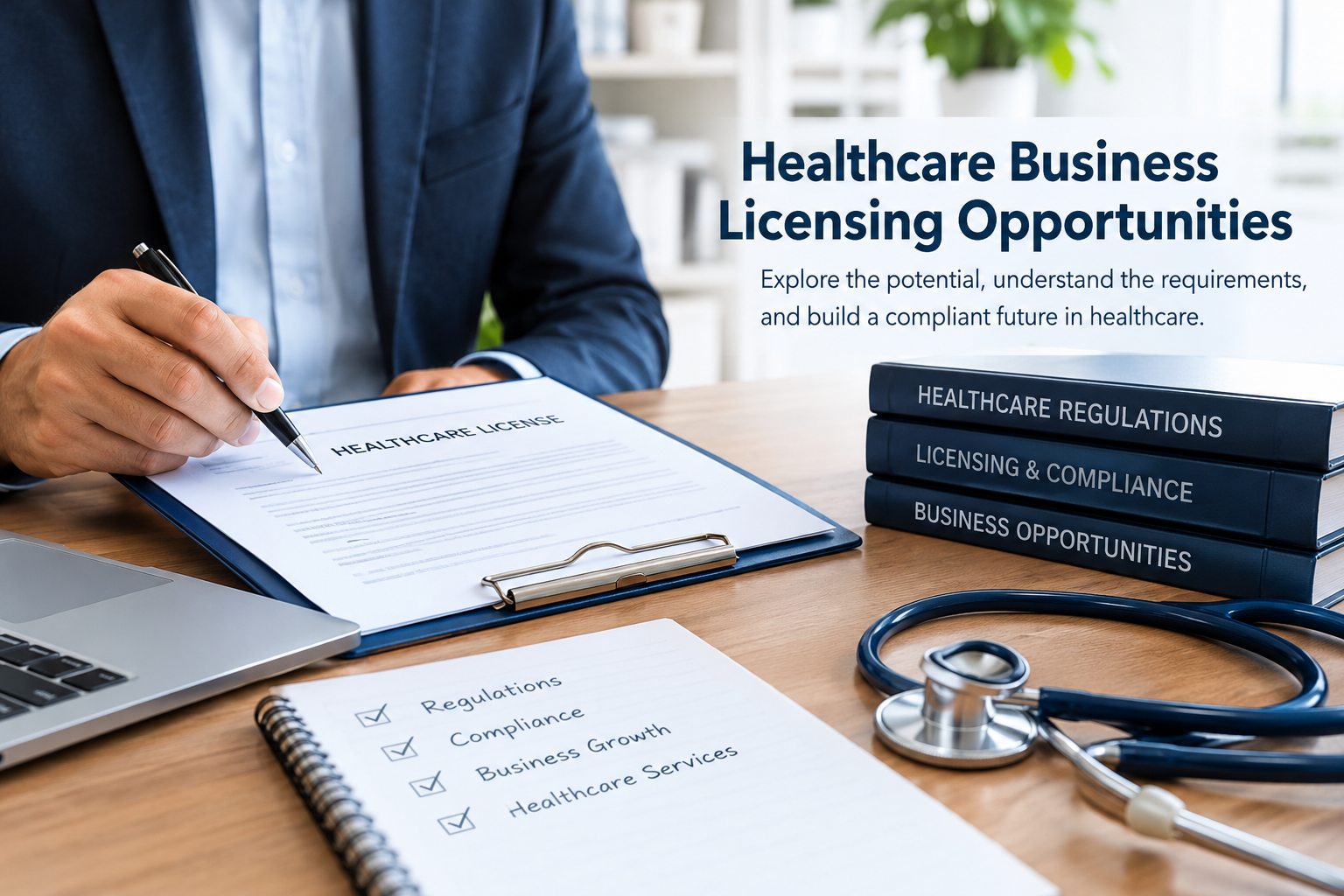
Healthcare business licensing opportunities are opening new pathways for businesses interested in regulated services, digital solutions, healthcare administration, and medical product distribution. As the healthcare sector continues to evolve, businesses must understand how licensing, professional qualifications, operational standards, and regulatory compliance affect their ability to enter the market.
Licensing is more than an administrative requirement. It can influence startup costs, service availability, expansion plans, and the types of customers a business can serve. Entrepreneurs who understand these factors early can make informed decisions, reduce avoidable risks, and develop business models that support long-term growth.
Understanding Healthcare Business Licensing Opportunities
Healthcare business licensing opportunities cover a range of commercial activities that require official permission, registration, certification, or other regulatory approval. The applicable requirements depend on the services provided, the products sold, the location of operations, and the responsibilities assumed by the business.
For example, a company offering administrative software may face different obligations from a business providing regulated professional services. A distributor selling certain medical products may also need specific product approvals or import authorization.
It is important to distinguish general business registration from sector-specific licensing. Registering a business legally does not mean it is automatically authorized to carry out all its planned activities. Businesses should identify the relevant regulatory category before investing in premises, equipment, technology, or staff.
Digital Healthcare and Technology-Based Business Models
Digital healthcare offers opportunities for businesses developing software, communication platforms, workflow automation, and remote service management tools. Potential business models include appointment systems, secure information management, remote monitoring technology, and administrative platforms.
The licensing position depends on how the technology functions. Software designed for routine scheduling may have different obligations from a product that supports clinical decisions or facilitates regulated professional services.
Data protection and cybersecurity are also essential considerations. Businesses handling sensitive information should establish appropriate access controls, secure storage practices, incident response procedures, and clear policies for collecting and sharing data.
Before launching a technology product, owners should assess its intended purpose, identify applicable regulatory requirements, and determine whether additional authorization is necessary. Integrating compliance into product development can reduce expensive changes later and support a more reliable customer experience.
Medical Product Distribution and Licensing Requirements
Medical product distribution can provide opportunities for businesses supplying equipment, monitoring devices, mobility products, protective supplies, and other specialized items. Commercial demand alone, however, does not determine whether a product can legally be sold.
Requirements may depend on product classification, intended use, manufacturing standards, import arrangements, and the market in which the product will be distributed. Certain categories may require registration, conformity documentation, traceability systems, or specific storage conditions.
Businesses should verify supplier credentials and product documentation before purchasing inventory. They should also establish procedures for managing warranties, complaints, product recalls, and customer inquiries where applicable.
A focused product range can help new businesses understand their obligations and control initial costs. Expansion into additional categories should follow a review of the relevant authorization requirements rather than relying on assumptions based on previously approved products.
Healthcare Administration and Support Services
Healthcare administration creates opportunities for businesses that help organizations manage operational workloads. Potential services include appointment coordination, billing administration, recruitment support, payroll processing, document management, and compliance consulting.
These activities may have different regulatory requirements from direct professional care, but they are not automatically exempt from legal responsibilities. Employment rules, confidentiality obligations, data security, and contractual requirements may apply.
Businesses should clearly define the boundaries of their services and ensure that staff possess the qualifications required for their assigned duties. Contracts should specify responsibilities, service standards, payment arrangements, confidentiality provisions, and procedures for handling disputes.
Specialization can also create a competitive advantage. A business that focuses on improving one operational process may be able to demonstrate its value more clearly than a provider offering a broad collection of unrelated services.
Home-Based and Community Support Services
Home-based and community support services may offer opportunities for businesses responding to demand for convenient assistance and coordinated care. Depending on local regulations, possible activities include non-clinical support, transportation coordination, scheduling, and approved personal assistance.
The distinction between general support and regulated care is particularly important. Activities involving treatment, diagnosis, medication administration, or other professional responsibilities may require additional licensing and qualified personnel.
Before establishing such a business, owners should verify the permitted scope of services and identify requirements relating to staff screening, insurance, training, safeguarding, recordkeeping, and incident reporting.
Financial planning should account for staffing availability, travel expenses, scheduling challenges, and service quality. These operational details affect customer satisfaction and profitability alongside licensing costs.
How to Prepare for Healthcare Business Licensing
A structured approach can help businesses identify the right permissions and prepare complete applications.
Define the business model. Clearly outline the products, services, target customers, operating locations, and professional responsibilities involved.
Identify the relevant authority. Research official regulatory guidance for the intended jurisdiction and business category. Requirements should be verified using current sources rather than generic checklists.
Review qualification requirements. Determine whether owners, managers, employees, or contractors need specific credentials, training, or individual authorization.
Prepare supporting documents. Depending on the activity, these may include registration records, ownership details, insurance evidence, operational policies, premises information, and product documentation.
Submit an accurate application. Follow the relevant process, provide complete information, and retain copies of all submissions and correspondence.
Maintain ongoing compliance. Monitor renewal dates, reporting duties, changes in ownership, workforce qualifications, and adjustments to the services offered.
Early preparation can reduce delays and help businesses avoid committing resources before confirming whether their intended activities are permitted.
Costs, Compliance, and Business Risk Management
Licensing costs vary according to the business model and jurisdiction. Expenses may include application fees, professional advice, insurance, staff training, inspections, technology systems, and documentation preparation.
Businesses should distinguish initial setup costs from recurring compliance expenses. Renewals, cybersecurity maintenance, continuing education, quality assurance, and regulatory reporting may create ongoing financial commitments.
A realistic budget should also include contingency funding for application delays or additional requirements. Revenue forecasts should remain conservative until customer demand and operating costs are better understood.
Risk management is equally important.Clear procedures, well-maintained documentation, employee training, and routine audits help businesses detect compliance issues early and prevent them from escalating. Appropriate insurance and clear contractual arrangements can provide additional protection, although neither replaces legal compliance.
Emerging Developments in Healthcare Licensing
Digital transformation, artificial intelligence, cybersecurity, and cross-border service delivery are influencing healthcare business planning. These developments can create opportunities, but they may also introduce additional regulatory responsibilities.
Businesses creating AI-powered solutions should evaluate how their products will be used, what decisions they could affect, and which sector-specific regulations they must follow. Businesses handling sensitive information should also review privacy requirements and security practices relevant to their operations.
Cross-border expansion requires particular attention because a business authorized in one jurisdiction may not automatically be permitted to operate in another. Product approvals, professional qualifications, data transfer rules, and local registration requirements may differ.
Business owners should monitor official regulatory updates and reassess their procedures when introducing new services, changing products, or entering new markets. This approach helps keep compliance aligned with the actual business model.
Conclusion
Healthcare business licensing opportunities span digital technology, product distribution, administration, and approved support services. Each category presents different requirements, costs, and operational responsibilities.
A sensible first step is to identify the intended business activities, check the applicable regulations, develop a realistic budget, and put effective compliance measures in place.
By treating licensing as an ongoing responsibility, businesses can make better-informed decisions, manage risks, and prepare for sustainable expansion.

 English
 Arabic
 French
 Spanish
 Portuguese
 Deutsch
 Turkish
 Dutch
 Italiano
 Russian
 Portuguese (Brazil)
 Greek