
Fertility Treatment in Ebene: Understanding Your Options for a Successful Parenthood Journey
Introduction
Starting a family is a beautiful dream for many couples. However, the journey to parenthood does not always happen as expected. Some couples conceive naturally within a few months, while others may need medical guidance, patience, and specialised fertility care. When pregnancy does not occur despite regular attempts, understanding the available treatment options can be the first step towards finding a solution.
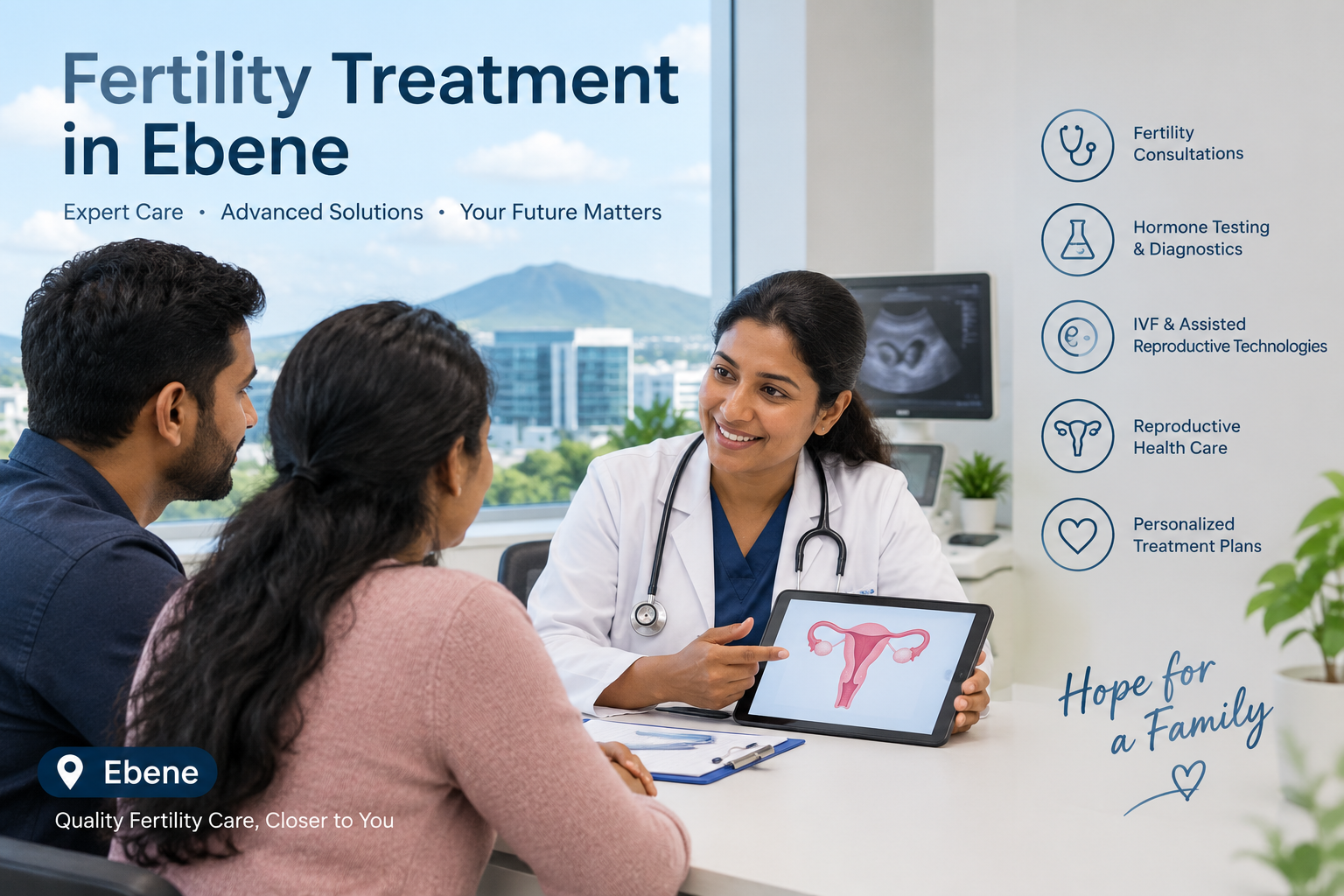
For couples exploring fertility treatment in Ebene, Mauritius offers access to fertility assessments, reproductive healthcare, and assisted reproductive technologies through specialised medical providers across the island. Ebene is an important business and healthcare-access hub, making it a convenient location for people seeking information about medical services and specialist consultations.
Fertility challenges can affect both men and women, and they are more common than many people realise. The important thing to remember is that experiencing difficulty conceiving does not mean that parenthood is impossible. With appropriate medical evaluation and an individualised treatment plan, couples can better understand their circumstances and explore suitable options.
This article explains the common causes of infertility, available fertility treatments, the importance of early diagnosis, and the factors couples should consider when choosing fertility care in and around Ebene.
Understanding Fertility Challenges
Infertility is generally defined as the inability to achieve pregnancy after 12 months of regular, unprotected sexual intercourse. For women aged 35 and above, medical evaluation is generally recommended after six months of trying. Women over 40 or individuals with known fertility-related conditions may benefit from seeking advice sooner.
There are several reasons why conception may take longer than expected. In women, conditions such as polycystic ovary syndrome (PCOS), endometriosis, blocked fallopian tubes, irregular ovulation, and age-related changes in egg quality can affect fertility.
In men, sperm count, movement, shape, hormonal factors, and certain medical conditions may influence the chances of conception. Sometimes, fertility difficulties involve both partners. In other cases, no clear explanation is identified despite appropriate investigations.
Understanding the underlying cause is essential because fertility treatment is not a one-size-fits-all process. A treatment that works well for one couple may not be appropriate for another.
For this reason, couples searching for fertility treatment in Ebene should begin by consulting a qualified fertility specialist or gynaecologist who can assess both partners and recommend suitable next steps.
Why Consider Fertility Treatment in Ebene?
Choosing where to seek fertility care is an important decision. Couples often consider accessibility, specialist experience, available diagnostic facilities, treatment costs, and the level of support provided throughout the process.
Ebene is a recognised commercial centre in Mauritius, and its location may be convenient for individuals who live or work in the surrounding areas. However, the most suitable fertility provider may be located in Ebene itself or in another part of Mauritius, depending on the treatment required.
When researching fertility services, it is helpful to look beyond location alone. Couples should ask whether the provider offers the necessary investigations, has access to appropriate laboratory facilities, explains treatment options clearly, and provides follow-up care.
Mauritius has fertility services offering different forms of reproductive assistance, including fertility investigations, intrauterine insemination, in vitro fertilisation, and other specialised procedures. The availability of particular services should always be confirmed directly with the relevant provider.
The goal is to find a medical team that understands your concerns, respects your privacy, and helps you make informed decisions without unnecessary pressure.
Fertility Assessment: The First Step Towards Treatment
Before recommending a treatment, a fertility specialist generally evaluates the reproductive health of both partners. This initial assessment helps identify potential causes of infertility and determines which options may be appropriate.
For women, the evaluation may include a review of menstrual cycles, medical history, previous pregnancies, and any symptoms associated with reproductive conditions. Blood tests may be recommended to assess relevant hormone levels, while an ultrasound may help examine the ovaries and uterus.
Depending on the patient's history, additional investigations may be needed to evaluate the fallopian tubes or identify conditions such as endometriosis.
For men, a semen analysis is commonly used to assess sperm concentration, movement, and morphology. Further testing may be recommended if the initial results indicate a possible problem.
Not every patient requires every available test. A qualified specialist will determine which investigations are appropriate based on the individual's circumstances.
A thorough assessment can prevent unnecessary procedures and help couples understand the options available to them. It also creates an opportunity to discuss expectations, possible treatment timelines, and financial considerations before beginning a fertility programme.
Common Fertility Treatment Options Available in Mauritius
The appropriate treatment depends on several factors, including the cause of infertility, the age of the female partner, previous treatment outcomes, and the couple's preferences.
1. Ovulation Induction
Ovulation induction involves using medication to encourage or regulate the release of eggs from the ovaries.
This approach may be suitable for women who experience irregular ovulation or do not ovulate consistently. Conditions such as PCOS can sometimes contribute to these difficulties.
A fertility specialist may prescribe medication and monitor the patient's response through ultrasound scans or blood tests. Depending on the circumstances, the treatment may be combined with advice about timing intercourse or another fertility procedure.
Ovulation-induction medication requires medical supervision because the choice of medicine, dosage, and monitoring schedule must be tailored to the patient.
For some couples, this may be an appropriate starting point before considering more complex treatments.
2. Intrauterine Insemination (IUI)
Intrauterine insemination, commonly called IUI, is a fertility procedure in which specially prepared sperm is placed directly into the uterus around the time of ovulation.
The aim is to bring sperm closer to the egg and improve the opportunity for fertilisation.
IUI may be considered in selected cases, depending on factors such as sperm quality, ovulation, and the condition of the fallopian tubes. It is not suitable for every type of infertility, and its chances of success vary according to individual circumstances.
The procedure is generally less complex than in vitro fertilisation. However, a specialist must determine whether it is an appropriate option after reviewing the couple's medical history and test results.
Couples considering fertility treatment in Ebene can ask local providers whether IUI is available and what investigations are required before treatment.
3. In Vitro Fertilisation (IVF)
In vitro fertilisation, widely known as IVF, is one of the best-known assisted reproductive technologies.
During IVF, medication is used to stimulate the ovaries to produce eggs. The eggs are then collected through a medical procedure and combined with sperm in a laboratory. If fertilisation occurs and embryos develop, an embryo may be transferred into the uterus.
The treatment usually involves several stages, including ovarian stimulation, monitoring, egg collection, fertilisation, embryo development, and embryo transfer.
Some patients may have additional embryos suitable for freezing and possible future use, depending on their circumstances and the clinic's protocols.
IVF may be considered for several reasons, including blocked fallopian tubes, certain sperm-related problems, endometriosis, unexplained infertility, or unsuccessful previous treatments.
Although IVF can offer an important opportunity for many couples, pregnancy is not guaranteed. Success rates depend on factors such as age, egg and sperm quality, the cause of infertility, and previous treatment history.
Before beginning IVF, couples should discuss the likely treatment schedule, possible risks, total costs, and the clinic's outcome reporting practices.
4. Intracytoplasmic Sperm Injection (ICSI)
Intracytoplasmic sperm injection, or ICSI, is a specialised technique often performed as part of IVF.
Instead of placing multiple sperm around an egg, an embryologist injects a single sperm directly into an egg to attempt fertilisation.
ICSI may be recommended in certain cases involving male-factor infertility, previous fertilisation difficulties, or specific clinical circumstances identified by the fertility team.
It is important to understand that ICSI addresses particular fertilisation challenges but does not eliminate every cause of infertility. The decision to use it should be based on a medical assessment rather than an assumption that it is always more effective than conventional IVF.
Couples should ask their specialist why ICSI is being recommended and whether the expected benefits justify its additional cost, if applicable.
5. Fertility Preservation
Some people may wish to preserve their reproductive options before undergoing medical treatments that could affect fertility or because they expect to postpone parenthood.
Fertility preservation can involve freezing eggs, sperm, or embryos, depending on the individual's circumstances and available services.
For example, people preparing for certain cancer treatments may be advised to discuss fertility preservation with their medical team before treatment begins.
The suitability, cost, timing, and legal requirements associated with these procedures should be discussed with a qualified specialist. Availability may vary between clinics.
For individuals considering fertility treatment in Ebene, asking about preservation options can help clarify whether this approach is relevant to their long-term family-planning goals.
The Importance of Choosing the Right Fertility Specialist
Fertility treatment can involve medical decisions, emotional challenges, and significant financial commitments. Choosing the right healthcare provider can make the process easier to understand and manage.
Look for a qualified specialist with relevant experience in reproductive medicine. Ask about the clinic's diagnostic facilities, laboratory capabilities, treatment protocols, and arrangements for follow-up consultations.
It is equally important to choose a team that communicates openly. You should feel comfortable asking questions about medication, potential side effects, success rates, and alternative treatment options.
Be cautious of any provider who guarantees pregnancy or promises a particular result. Fertility outcomes are influenced by many factors, and responsible medical professionals explain both the potential benefits and limitations of treatment.
When comparing providers, ask how success rates are calculated. For example, a pregnancy rate per embryo transfer is different from a live-birth rate per treatment cycle started.
Understanding these differences helps you compare information more fairly and make decisions based on realistic expectations.
Emotional Well-Being During Fertility Treatment
The emotional side of infertility deserves as much attention as the medical side.
Couples may experience sadness, frustration, anxiety, uncertainty, or pressure from relatives and friends. Repeated appointments and waiting for test results can make the experience especially demanding.
It is important to remember that fertility difficulties are not a personal failure. They are medical challenges that deserve understanding, professional care, and compassion.
Partners can support one another by communicating honestly, attending appointments together when possible, and discussing decisions before beginning treatment.
Some couples also benefit from fertility counselling or support groups. Speaking with someone who understands the emotional impact of infertility can help people manage stress and cope with uncertain outcomes.
Taking breaks when medically appropriate, maintaining supportive relationships, and making time for activities unrelated to treatment may also help protect emotional well-being.
A good fertility care experience should recognise the person behind the diagnosis and provide space for questions, concerns, and informed choices.
Healthy Habits That Support Reproductive Health
Lifestyle changes cannot guarantee pregnancy, and they cannot replace necessary medical treatment. However, certain habits can support general health before and during fertility care.
Eating a balanced diet with vegetables, fruits, whole grains, protein sources, and healthy fats can contribute to overall well-being.
Regular physical activity, adequate sleep, and maintaining a healthy weight where possible may also be beneficial. Smoking cessation is important for both partners because smoking can negatively affect reproductive health.
People trying to conceive should discuss alcohol consumption, prescription medicines, non-prescription products, and supplements with their healthcare provider.
Women planning pregnancy are generally advised to discuss folic acid supplementation with a qualified healthcare professional. The recommended dose may vary according to individual risk factors and medical advice.
For men, managing chronic health conditions and avoiding anabolic steroids or unprescribed fertility products may also be important.
These habits are best viewed as part of a broader approach to reproductive health rather than a substitute for investigating persistent fertility difficulties.
Understanding the Cost of Fertility Treatment in Ebene
The cost of fertility treatment can vary considerably depending on the procedure, clinic, investigations required, medication, and the number of treatment cycles.
An initial consultation and basic fertility tests may cost considerably less than an IVF cycle involving medication, egg collection, laboratory fertilisation, and embryo transfer.
Additional expenses may arise from specialised investigations, embryo freezing, storage, or follow-up procedures.
When comparing clinics, ask for a written estimate that clearly explains what is included and what may incur additional charges. Find out whether the quoted price covers consultations, laboratory services, medication, monitoring, and follow-up appointments.
It is also sensible to ask about payment arrangements and the potential costs of another cycle if the first attempt is unsuccessful.
Rather than choosing a provider based on price alone, consider the overall quality of care, transparency, accessibility, and suitability of the recommended treatment.
A clear understanding of the financial commitment can help couples plan ahead and reduce avoidable uncertainty during treatment.
Questions to Ask Before Starting Treatment
Before beginning fertility treatment, prepare a list of questions for your specialist.
Ask what may be causing the difficulty conceiving, which tests are necessary, and what treatment options are available for your specific circumstances.
Find out why a particular procedure is being recommended, what its potential risks are, and how success will be measured.
You may also want to ask how long treatment is expected to take, whether appointments can be coordinated around your work schedule, and what support is available if the first attempt is unsuccessful.
If you are considering a clinic in or near Ebene, confirm its current location, available services, consultation arrangements, and whether any procedures require referral to another facility.
Taking time to understand these details can help you feel more confident about your decisions.
Conclusion
Finding the right fertility treatment in Ebene begins with understanding your reproductive health and seeking guidance from qualified medical professionals. From initial fertility investigations and ovulation induction to IUI, IVF, ICSI, and fertility preservation, several treatment options may be available depending on the underlying cause of infertility.
Every couple's journey is different. Some may benefit from relatively simple interventions, while others may need specialised assisted reproductive technologies and more extensive investigations.
The most important step is to obtain an accurate diagnosis, understand the options available, and choose a healthcare team that provides personalised, compassionate, and transparent care.
For couples hoping to start or expand their families, seeking professional advice can provide clarity about the next steps. Although fertility treatment cannot guarantee a particular outcome, informed decisions and appropriate medical support can help couples approach the journey with greater confidence and realistic expectations.

 English
 French
 Spanish
 Portuguese
 Deutsch
 Turkish
 Dutch
 Italiano
 Russian
 Romaian
 Portuguese (Brazil)
 Greek