
How Hanging Clamps Improve the Safety and Stability of Piping Systems
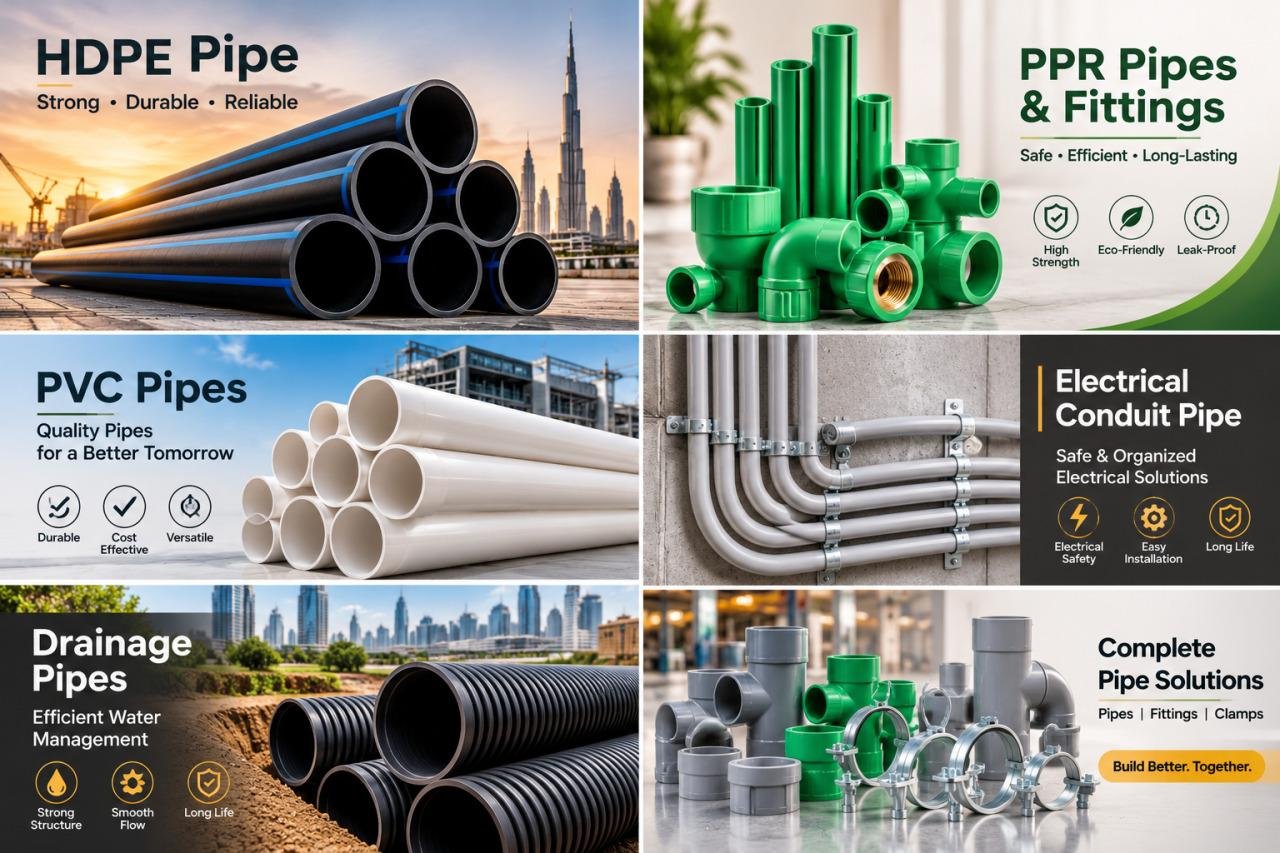
Modern plumbing, HVAC, fire-protection, and industrial piping systems need reliable support to remain stable and properly aligned. hanging clamps are commonly used to suspend pipes from ceilings, structural members, channels, and other suitable supports. By holding piping securely in position, these components can help reduce unwanted movement, sagging, vibration, and stress on connections. Choosing the right clamp depends on pipe material, diameter, weight, installation direction, temperature, insulation, and the surrounding structure.
Pipe-support systems may appear to be a small part of a construction project, but they have an important role in the long-term performance of the entire piping network. A pipe carrying water or another fluid becomes significantly heavier when filled, so the supporting arrangement must be designed for the actual operating conditions.
What Are Hanging Clamps?
Hanging clamps are mechanical support components designed to suspend or secure pipes from an overhead structure. They are commonly combined with threaded rods, channels, brackets, beam clamps, or other support hardware.
Different designs are available for different applications. Common examples include split-ring hangers, clevis hangers, adjustable ring supports, two-bolt clamps, and channel-mounted clamps. Engineering guides identify several types of pipe supports and hangers for different pipe sizes and installation conditions.
The purpose is not simply to hold a pipe in place. A properly selected support should maintain the required position while accommodating the movement and operating conditions of the piping system.
Why Pipe Support Is Important
Pipes can experience several types of movement during normal operation. Water flow, pumps, pressure changes, vibration, temperature variations, and thermal expansion can all affect a piping installation.
Without sufficient support, a horizontal pipe may sag between fixing points. Movement can also place additional stress on joints and connected equipment.
Proper support helps:
-
Maintain pipe alignment
-
Reduce excessive movement
-
Prevent unnecessary sagging
-
Support the weight of the pipe and its contents
-
Reduce stress on joints
-
Improve installation stability
-
Make maintenance easier
-
Maintain required slopes where applicable
Pipe-support guidance emphasizes that supports should account for the pipe, its contents, movement, vibration, and required alignment.
Common Types of Hanging Clamps
Different piping applications require different support designs.
Split-Ring Clamps
Split-ring designs surround the pipe and connect to a threaded rod or other suspension component. They are commonly used for smaller or medium-sized piping where adjustable suspension is required.
Clevis Hangers
Clevis hangers provide a cradle-like support beneath the pipe and can be suspended from an overhead structure. They are commonly used for horizontal piping and are available in different sizes.
Two-Bolt Clamps
Two-bolt designs provide stronger gripping around the pipe and can be useful where additional stability is required. Their selection should be based on pipe diameter, load, material, and project requirements.
Channel-Mounted Clamps
Where several services run together, clamps can be attached to a metal channel or strut system. This creates a modular support arrangement that can be adjusted as the installation develops.
Adjustable Hangers
Adjustable designs can help installers achieve the correct pipe elevation. This can be particularly useful where multiple pipes need to run at coordinated heights.
Selecting the Correct Clamp
There is no single clamp suitable for every piping installation. Selection should begin with the characteristics of the pipe and the environment.
Pipe Diameter
The clamp must match the outside diameter of the pipe. A poorly sized component may fail to hold the pipe correctly or may place excessive pressure on the pipe wall.
Pipe Weight
The weight of the pipe itself is only part of the calculation. Water, insulation, valves, fittings, and other components can add considerable load.
Pipe Material
Plastic, steel, copper, and other piping materials can have different support requirements. The interaction between the clamp material and pipe surface should also be considered.
Temperature
Hot-water and other temperature-sensitive systems may expand and contract during operation. A support that is suitable for a stationary cold line may not be appropriate for a system requiring controlled movement.
Engineering guidance notes that supports should be selected with thermal expansion and contraction in mind.
Importance of Proper Support Spacing
Support spacing is another important consideration. If supports are placed too far apart, a pipe may sag. If they are installed too closely together, material and labor costs can increase unnecessarily.
The correct spacing depends on the pipe material, diameter, operating conditions, fluid weight, insulation, and applicable standards or project specifications.
There should not be a universal spacing value applied to every project. Instead, installers should follow the relevant engineering drawings, manufacturer recommendations, and applicable codes.
Where a piping system changes direction or contains heavy valves and fittings, additional support may also be necessary depending on the design.
Supporting Pipes From Ceilings
Overhead pipe installation is common in commercial buildings, warehouses, factories, hospitals, hotels, and other facilities.
A typical suspended system may use a threaded rod connected to an overhead anchor or structural support, with a clamp or hanger supporting the pipe below.
Before installing the support, the structure must be checked to ensure it can safely carry the required load. Support hardware should never be attached to an unsuitable surface simply because it is convenient.
For larger installations, channel or trapeze systems may allow several parallel pipes to be supported from a common structural arrangement.
Thermal Expansion and Movement
Temperature changes can cause piping materials to expand and contract. This is particularly relevant for hot-water and HVAC systems.
A rigidly fixed pipe may require controlled points of movement rather than being tightly restrained everywhere. Depending on the system design, engineers may use guides, anchors, sliding supports, or suitable hanger arrangements.
The objective is to allow planned movement while keeping the pipe properly aligned.
Using an inappropriate clamp can potentially restrict movement or damage insulation. For this reason, clamp selection should consider both the pipe and its operating temperature.
Installation Best Practices
Correct installation is essential for achieving reliable pipe support.
Before installation, the route should be marked and support locations should be determined from the approved design. The installer should verify the pipe diameter and select compatible hardware.
Important practices include:
-
Use clamps designed for the specific pipe size.
-
Check the load capacity of the support assembly.
-
Use suitable anchors and fasteners.
-
Maintain appropriate support spacing.
-
Keep pipes properly aligned.
-
Provide additional support where required for heavy fittings.
-
Avoid crushing insulation.
-
Allow designed thermal movement.
-
Inspect connections after installation.
-
Follow manufacturer and project specifications.
Support systems should also be checked periodically, especially in areas where vibration, moisture, corrosion, or heavy equipment operation is present.
Applications Across Different Industries
Hanging support systems are used in many building services.
Plumbing
Water-supply and drainage lines may require overhead support to maintain alignment and appropriate slope.
HVAC
Chilled-water and other HVAC piping often runs through ceilings and service areas. Proper supports can help maintain stable pipe routes and protect insulation.
Fire Protection
Fire-protection piping requires carefully designed support systems that meet the applicable project and safety requirements.
Industrial Facilities
Factories and processing facilities may contain extensive networks of process piping. These systems can require specialized supports capable of handling larger loads, vibration, and temperature changes.
Commercial Buildings
Shopping centers, offices, hotels, hospitals, and warehouses often have multiple services running through ceiling spaces. Organized support systems can help keep these installations accessible and orderly.
Choosing a Reliable Supplier
When purchasing pipe-support components, buyers should evaluate quality rather than choosing solely on price.
Important considerations include:
-
Material quality
-
Load capacity
-
Corrosion resistance
-
Dimensional accuracy
-
Compatibility with pipe size
-
Availability of matching accessories
-
Technical documentation
-
Application suitability
For environments exposed to moisture or corrosive conditions, material selection becomes particularly important. For example, a 2026 DEWA procurement specification for piping supports required seawater-resistant supports and specified additional protection requirements for certain support materials in marine environments.
This illustrates why support hardware should be selected according to the actual site environment rather than using the same product everywhere.
Maintenance and Inspection
Pipe supports should not be ignored after installation. Periodic inspection can identify loose fasteners, corrosion, damaged components, movement, or signs of excessive loading.
Maintenance teams should pay particular attention to areas around valves, pumps, joints, and equipment connections because movement or vibration may be more noticeable in these locations.
If insulation is installed around the pipe, inspection should also check whether the support is compressing or damaging the insulation.
Final Thoughts
Pipe-support components are essential for maintaining stable and organized piping systems. The correct clamp can help carry the required load, maintain alignment, reduce unwanted movement, and support long-term maintenance.
However, choosing a suitable product requires more than matching the clamp to the pipe diameter. Pipe weight, material, temperature, insulation, movement, support spacing, structural conditions, and environmental exposure should all be considered.
For residential, commercial, HVAC, plumbing, and industrial projects, working from approved engineering requirements and using quality support hardware can help create a safer and more dependable piping installation.

 English
 Arabic
 French
 Spanish
 Deutsch
 Turkish
 Dutch
 Italiano
 Russian
 Romaian
 Portuguese (Brazil)
 Greek